

If your revenue feels inconsistent, your pipeline probably is.
One month you close multiple deals.
The next month? Silence.
That unpredictability doesn’t usually mean your product is bad. It means your sales pipeline isn’t structured properly.
The most scalable businesses don’t rely on referrals or random inbound inquiries. They build a predictable sales pipeline powered by multi-channel lead generation.
In this guide, we’ll break down exactly how to do that in a strategic, sustainable way.
What Is a Sales Pipeline?
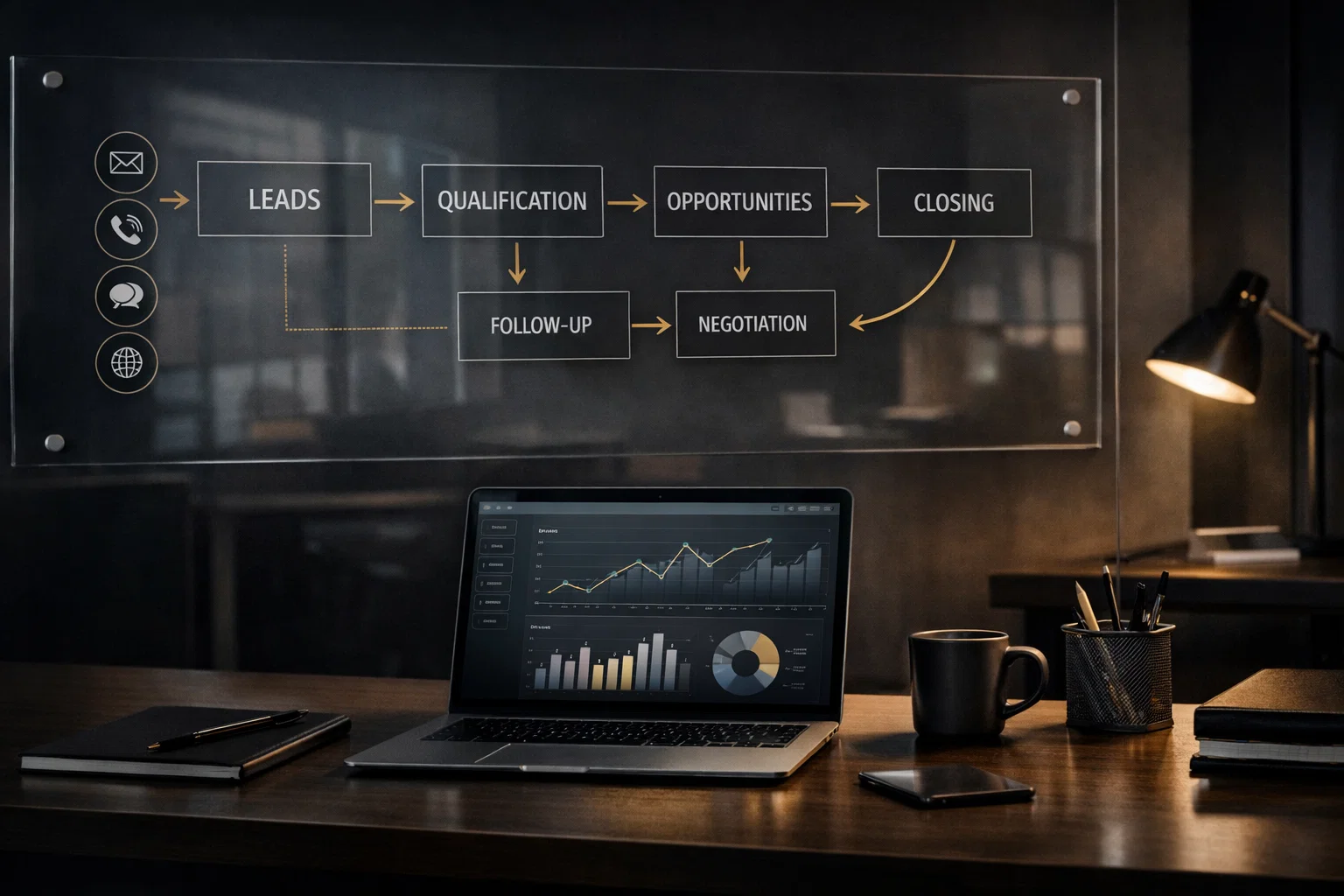
A sales pipeline is the structured journey a prospect takes from first interaction to closed deal.
It typically includes:
- Awareness
- Lead capture
- Qualification
- Nurturing
- Proposal
- Closing
A predictable pipeline means you can:
✔ Forecast revenue
✔ Estimate monthly deal flow
✔ Optimize conversion rates
✔ Identify bottlenecks early
Without structure, growth becomes reactive instead of strategic.
Why Single-Channel Lead Generation Fails
Many businesses rely on just one source:
- Only referrals
- Only SEO
- Only paid ads
- Only cold outreach
The problem?
If that one channel slows down, your pipeline dries up.
That’s why multi-channel lead generation is essential.
It creates stability and diversification.
What Is Multi-Channel Lead Generation?
Multi-channel lead generation means acquiring prospects through multiple coordinated touchpoints, such as:
- SEO & content marketing
- Paid search ads
- LinkedIn outreach
- Cold email campaigns
- Retargeting ads
- Webinars
- Strategic partnerships
Instead of hoping one tactic works, you build an ecosystem.
The result? More consistent pipeline flow.
Step-by-Step: Building a Predictable Sales Pipeline
Step 1: Define Your Ideal Customer Profile (ICP)
Pipeline predictability starts with precision.
You must clearly define:
- Industry
- Company size
- Revenue range
- Decision-maker role
- Pain points
- Budget capacity
If your targeting is broad, your pipeline becomes chaotic.
Clarity improves lead quality and close rates.
Step 2: Map Your Funnel Stages Clearly
Most businesses lose deals because they don’t define stages properly.
Create structured pipeline stages like:
1️⃣ New Lead
2️⃣ Qualified Lead
3️⃣ Discovery Call Completed
4️⃣ Proposal Sent
5️⃣ Negotiation
6️⃣ Closed Won / Lost
When stages are defined, you can measure:
- Conversion rate per stage
- Drop-off points
- Sales cycle duration
Measurement creates predictability.
Step 3: Activate Multi-Channel Lead Sources
Now comes acquisition.
Channel 1: SEO & Content Marketing
Target high-intent keywords like:
- Sales pipeline optimization
- Multi-channel lead generation strategies
- B2B lead generation services
Organic traffic builds long-term consistency.
Channel 2: Paid Search Ads
High-intent Google Ads targeting commercial keywords often bring ready-to-buy prospects.
Direct them to focused landing pages — not your homepage.
Channel 3: LinkedIn Outreach (For B2B)
Connect with decision-makers directly.
Personalized outreach outperforms mass messaging.
Channel 4: Cold Email with Segmentation
When personalized and relevant, cold email remains effective.
Focus on value and problem-solving.
Channel 5: Retargeting Campaigns
Most visitors won’t convert immediately.
Retargeting keeps your brand visible and increases second-touch conversions.
Step 4: Implement Lead Qualification Systems
A predictable sales pipeline depends on filtering.
Use lead scoring based on:
- Industry fit
- Company size
- Website behavior
- Content engagement
- Budget signals
This ensures your sales team focuses only on high-probability prospects.
Step 5: Automate Follow-Ups
Speed increases conversion.
Use automation for:
- Initial responses
- Reminder emails
- Meeting scheduling
- Proposal follow-ups
Many deals are lost not because of price — but because of slow follow-up.
Step 6: Track the Right Metrics
Pipeline health is measured by data.
Key metrics include:
- Cost per qualified lead
- Conversion rate by stage
- Sales cycle length
- Close rate
- Revenue per lead
If you don’t measure these, growth remains unpredictable.
Common Pipeline Bottlenecks
Even with multi-channel lead generation, issues can arise:
❌ Too many unqualified leads
❌ Poor landing page messaging
❌ Weak discovery calls
❌ No follow-up structure
❌ Long response times
Identifying bottlenecks early keeps your pipeline stable.
How Multi-Channel Strategy Improves Predictability
Let’s say:
- SEO generates 30 leads/month
- Paid ads generate 40 leads/month
- Outreach generates 20 leads/month
Even if one channel drops temporarily, others maintain flow.
Diversification reduces revenue volatility.
Example Pipeline Structure for B2B
Here’s a simplified model:
- 100 leads generated
- 60 qualify
- 30 discovery calls
- 15 proposals
- 7 closed deals
Once you know your average conversion percentages, forecasting becomes simple.
That’s the power of structured pipeline management.
How Long Does It Take to Build Predictability?
It depends on:
- Industry competition
- Channel efficiency
- Budget
- Optimization frequency
Usually, within 2–4 months of structured implementation, businesses start seeing consistency.
Long-term stability comes from continuous refinement.
The Strategic Advantage
Businesses with predictable pipelines:
✔ Scale confidently
✔ Hire strategically
✔ Invest in growth
✔ Reduce stress
✔ Improve valuation
Predictability isn’t luck. It’s design.
Final Thoughts
Building a predictable sales pipeline with multi-channel lead generation requires:
- Clear targeting
- Structured funnel stages
- Diversified acquisition
- Automated follow-ups
- Performance tracking
When these elements align, revenue stops being unpredictable.
Instead of asking:
“Where will our next deal come from?”
You start asking:
“How do we scale this system further?”
That shift changes everything.